End of the Affair
2023 - 2025


Exhibitions
Overview
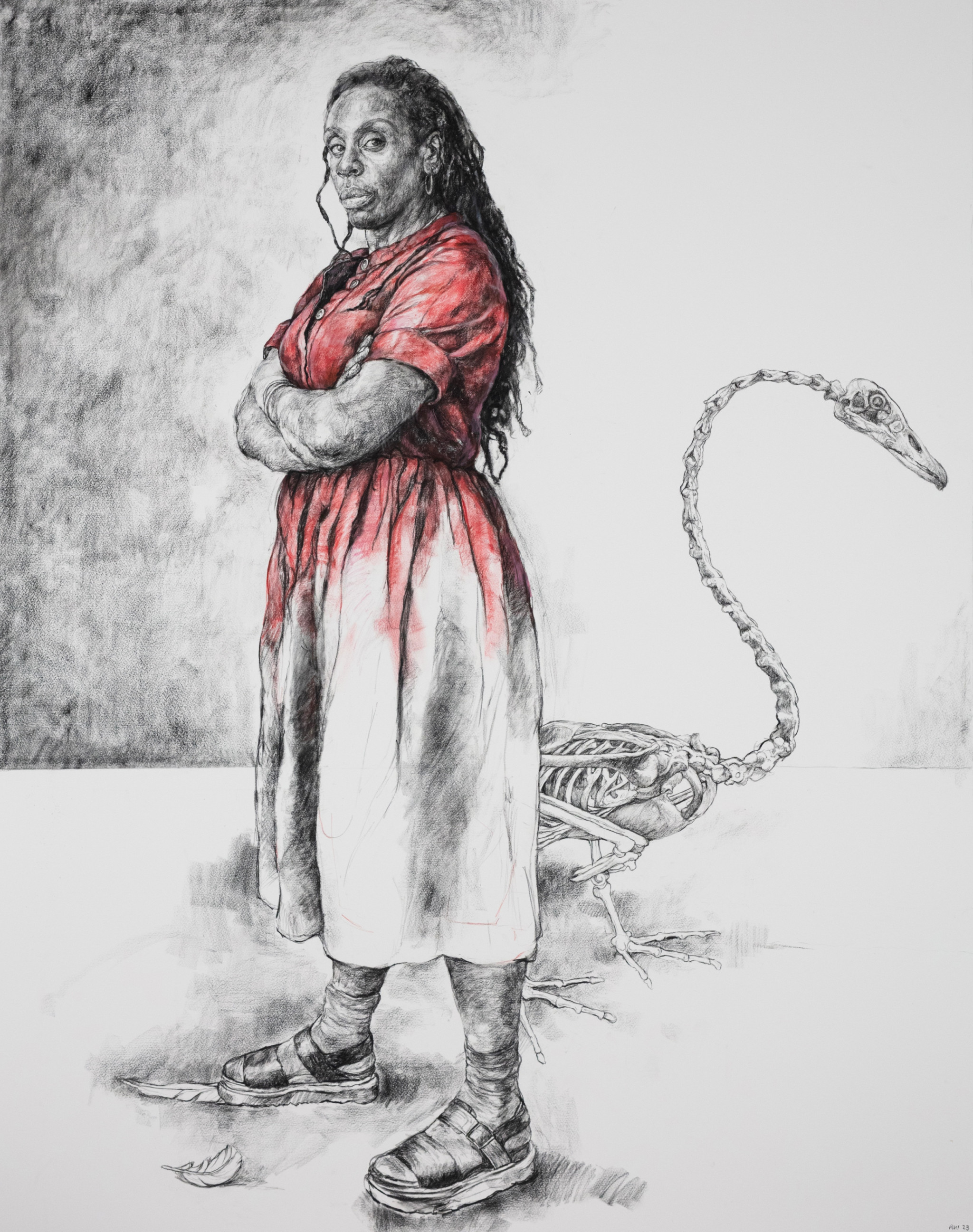
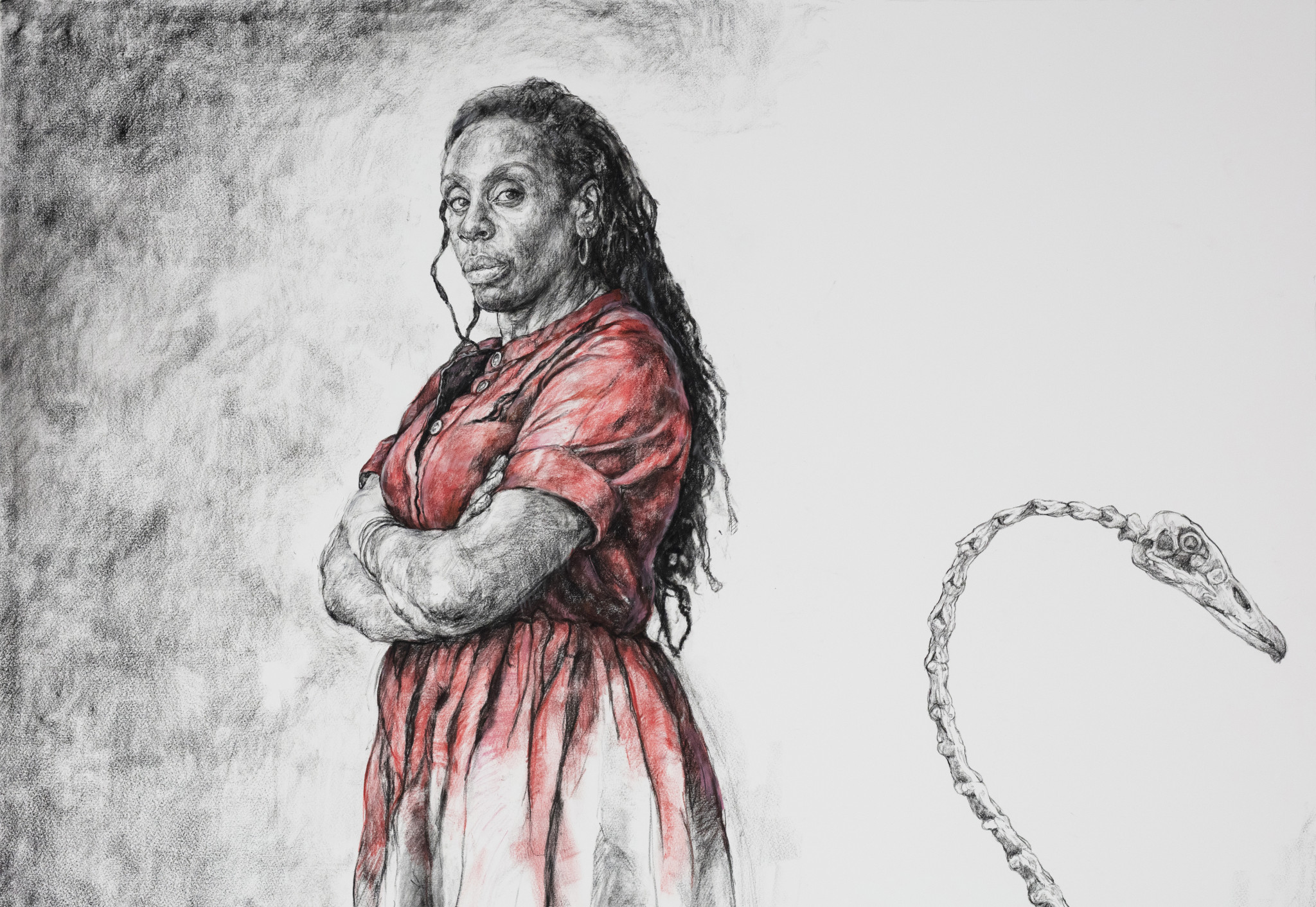
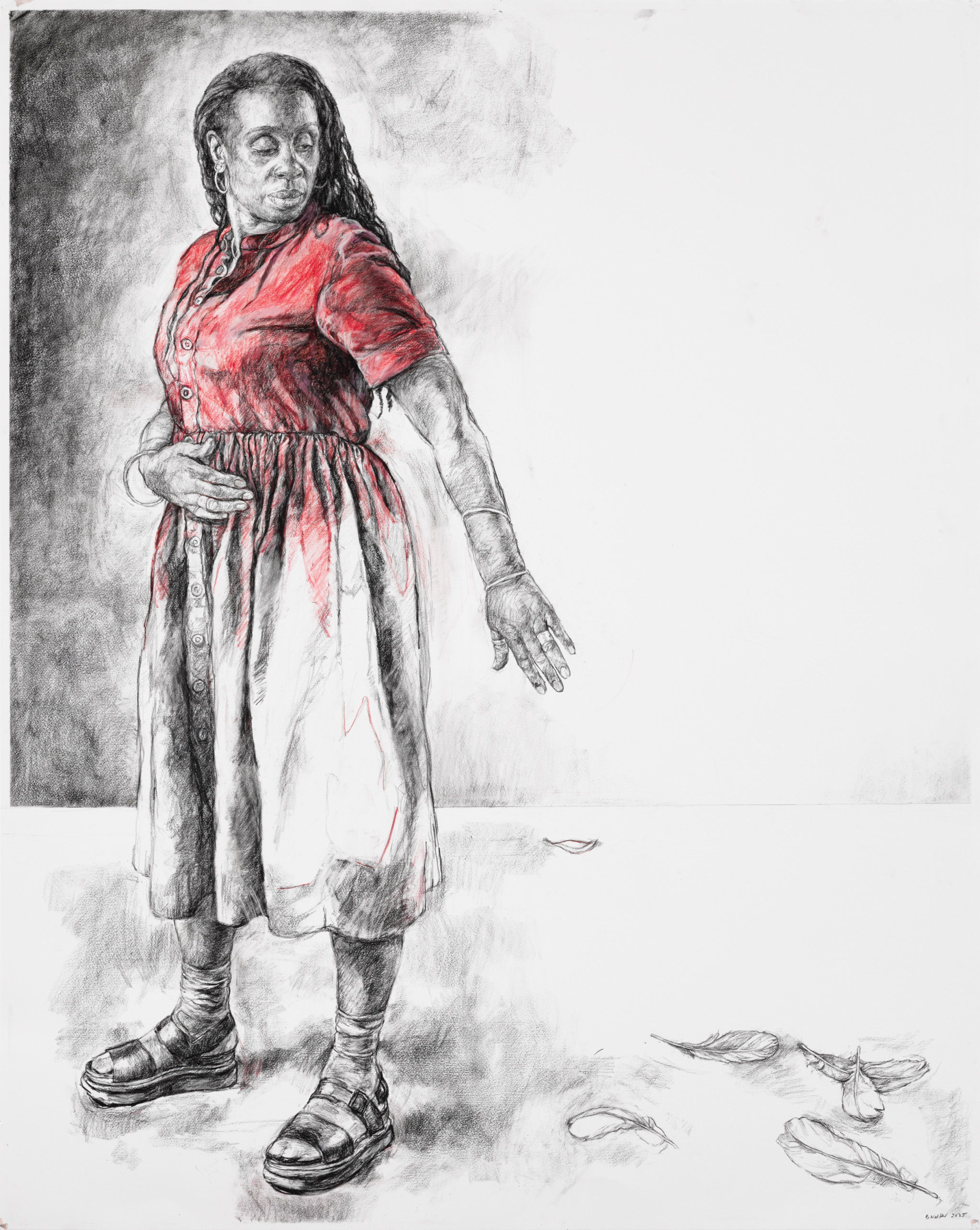
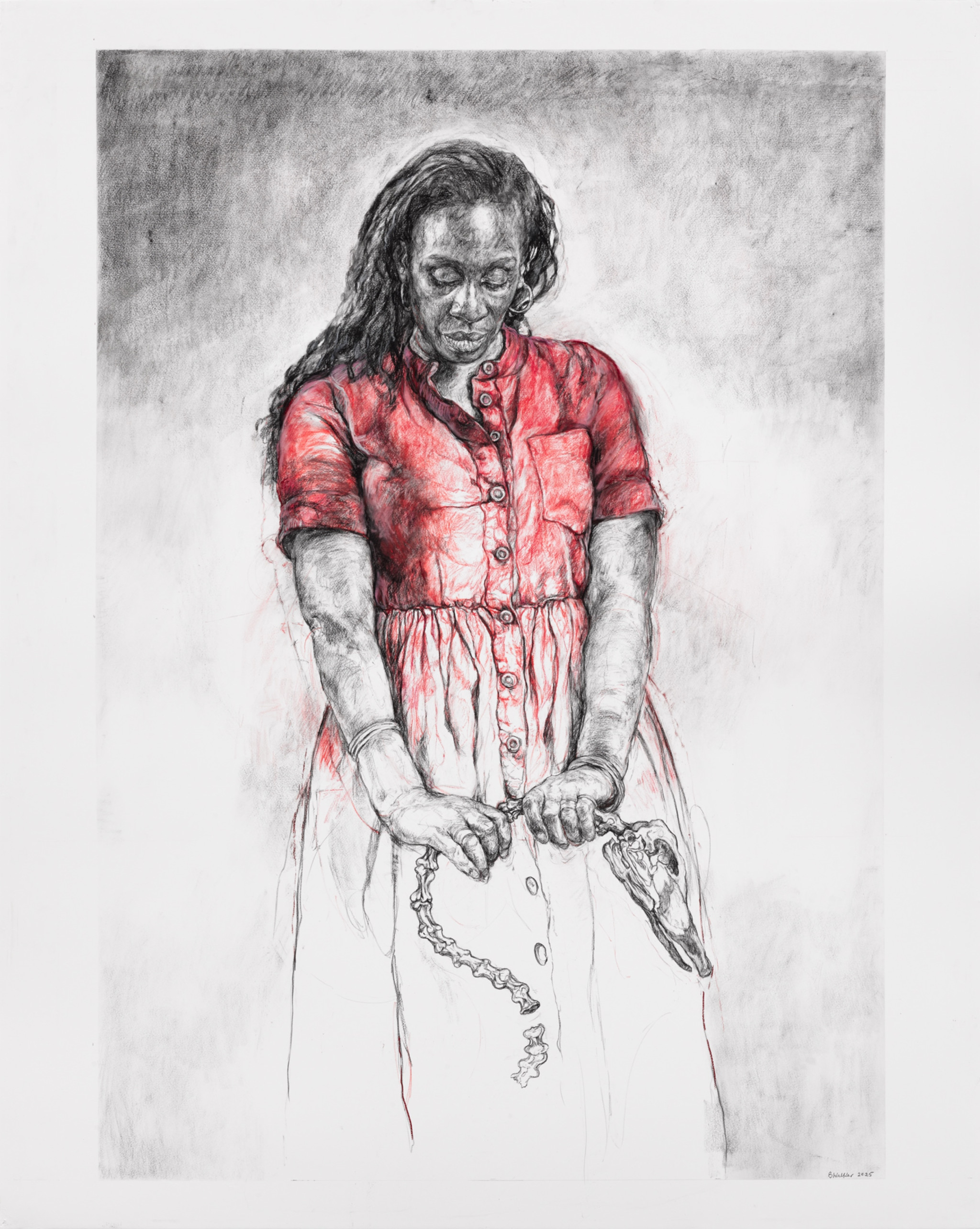
Walker’s series of three drawings, End of the Affair, responds to the classical Greek myth of Leda and the Swan. The original story describes how the Greek god Zeus transforms into a magnificent swan to seduce Leda, Queen of Sparta. This well-known antiquity has been depicted by a canon of mostly male artists from the Italian Renaissance to the present day. In these drawings, Walker retells the myth on her own terms, using herself as the model to assert a version of Leda who stands defiant and centre stage before an emasculated Zeus.
Walker says of the work:
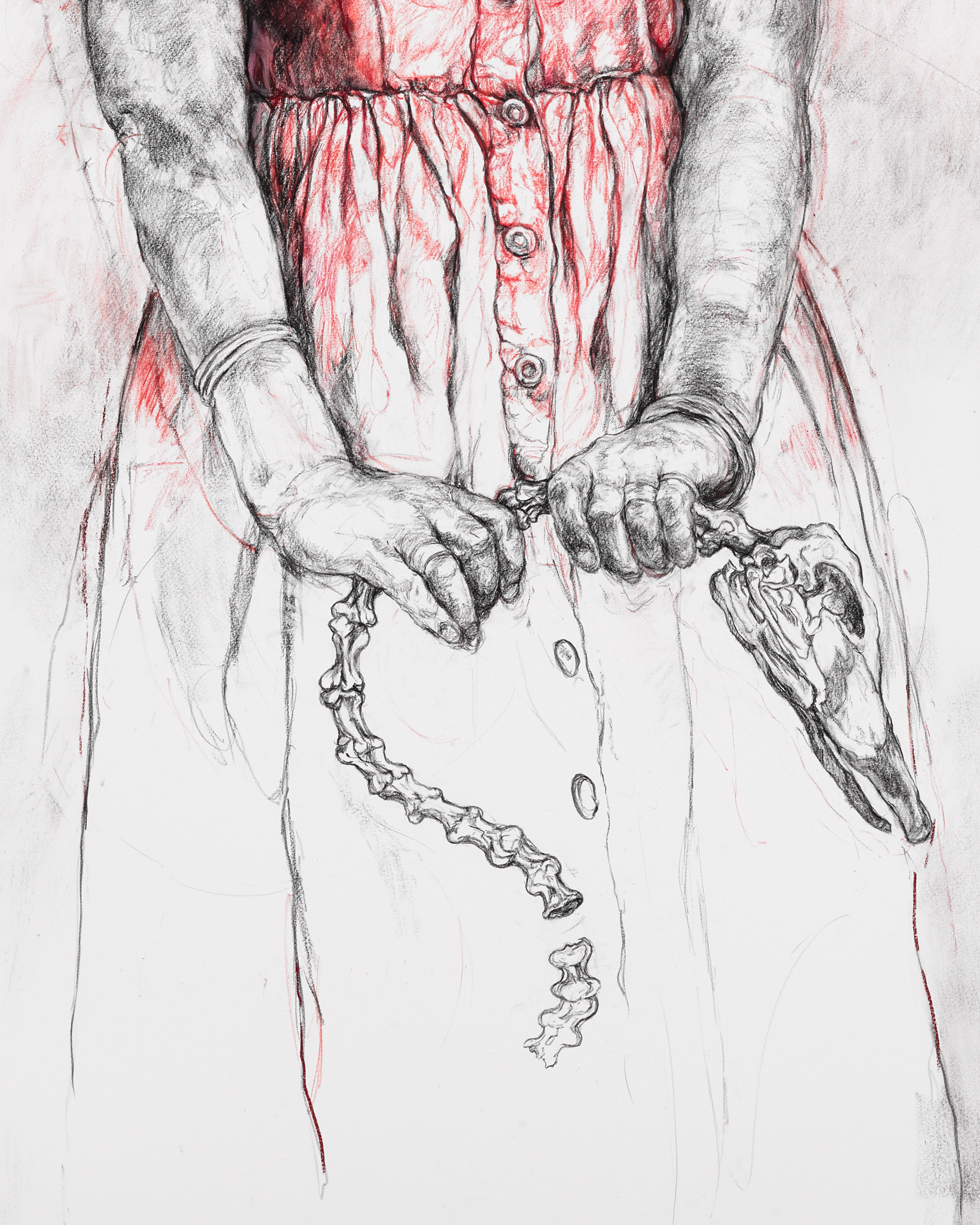
"My approach to this commission was to do a drawing directly reconfiguring the images of both Leda and the Swan. I wanted to consider the figure of Leda and subvert her role. Throughout art history, particularly in the 16th century, she was represented in eroticised classical poses with a seemingly complex relationship with the swan. I didn’t want to portray her as submissive or passive. In my drawing she’s strong; she has dignity. But there are contradictions in the work also.
'Leda' is moving away from the swan, who is represented as a skeleton. He has changed, and her attitude towards him has changed also. He no longer has any power over her. Before he was a beautiful creature; now he is just an ossified specimen. The drawing is partly autobiographical: Leda is me thinking about a past relationship. I made a conscious decision to put myself in the frame. But it’s also about relationships in general, focusing on who we are and what we possess and desire. I was also looking at whiteness; in depictions of Greek mythology, you’ll never see a Black figure in the central role, so I wanted to subvert the ideology by putting myself as the central figure. I also removed the white plumage of the swan and rendered him as a skeleton, no longer living but bone-white instead."
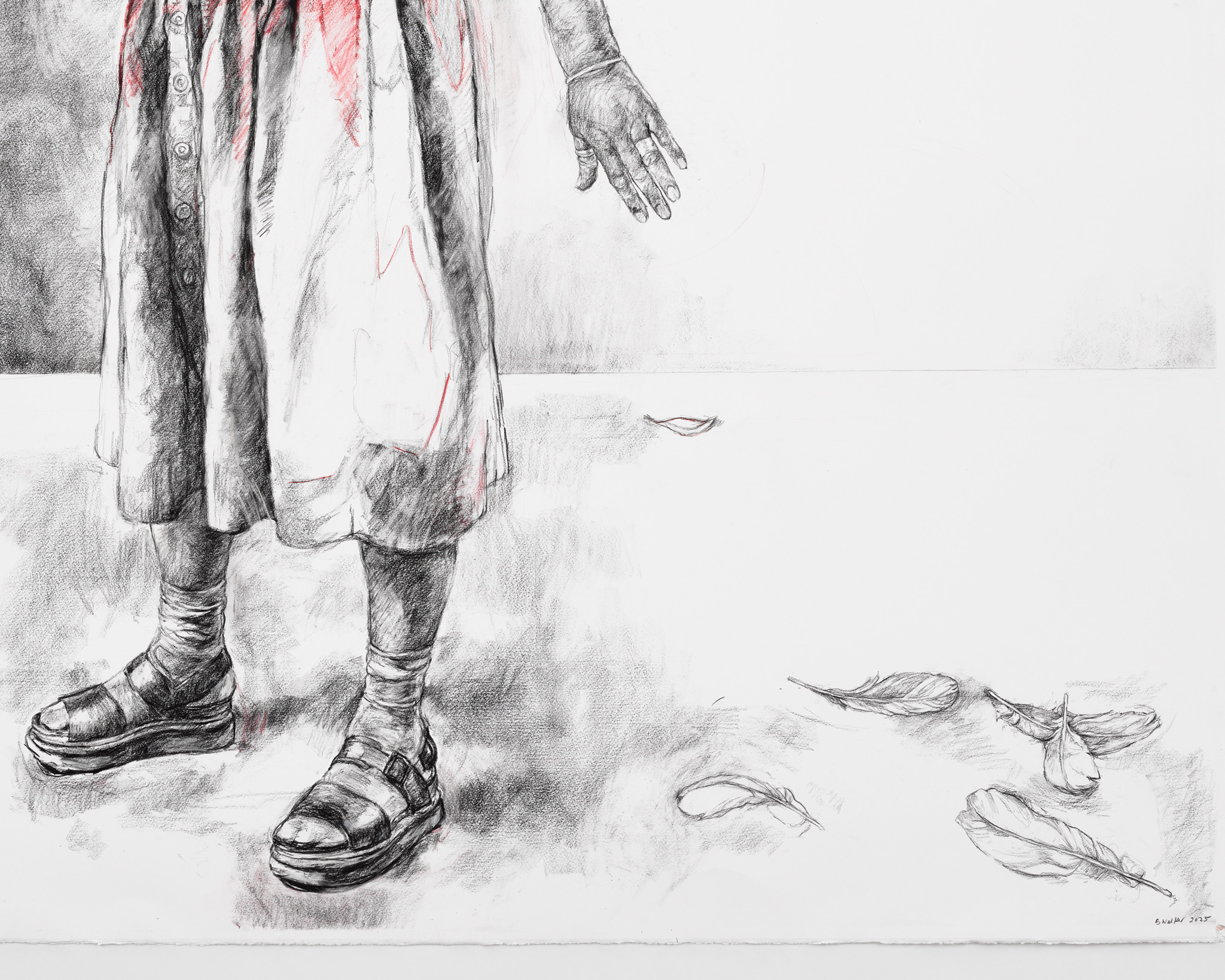
The feathers scattered on the ground, or caught beneath the heel in End of the Affair I and II, can be viewed as a duality: Leda is clinging to the memory of a past relationship while simultaneously asserting her dominance. By literally treading upon these remnants, she proves she is finally in control. While the title is an ironic nod to Graham Greene’s novel, these specific works serve as a profound reclamation of power. By merging the personal with the political, Walker transforms a centuries-old myth into a contemporary statement of defiance, where the ghost of the past is no longer an oppressor but a trophy of her own resilience.